
Weekly Pool Cleaning Tools You Need for Crystal Clear Water
Weekly Pool Cleaning Tools Every Las Vegas Pool Owner Needs for Crystal‑Clear Water
Keeping a pool clear on a weekly schedule starts with the right tools and a repeatable routine that stops algae, mineral buildup, and debris from turning into costly repairs. This guide lays out the manual and automated tools that matter for weekly care, explains step‑by‑step water testing and chemical balancing, and shows how to pick and maintain supplies for Las Vegas conditions. You’ll get a concise weekly checklist, a straightforward comparison of cleaner types (robotic, suction‑side, pressure‑side), and practical advice on test kits, chemicals, and tool choices tuned to local water hardness and desert dust. Our goal: help homeowners and property managers save time and money while protecting pool finishes and equipment. Read on for must‑have tools, a weekly routine that works, and how professional weekly service fits into long‑term pool protection.
What Are the Must‑Have Manual Pool Cleaning Tools for Weekly Maintenance?
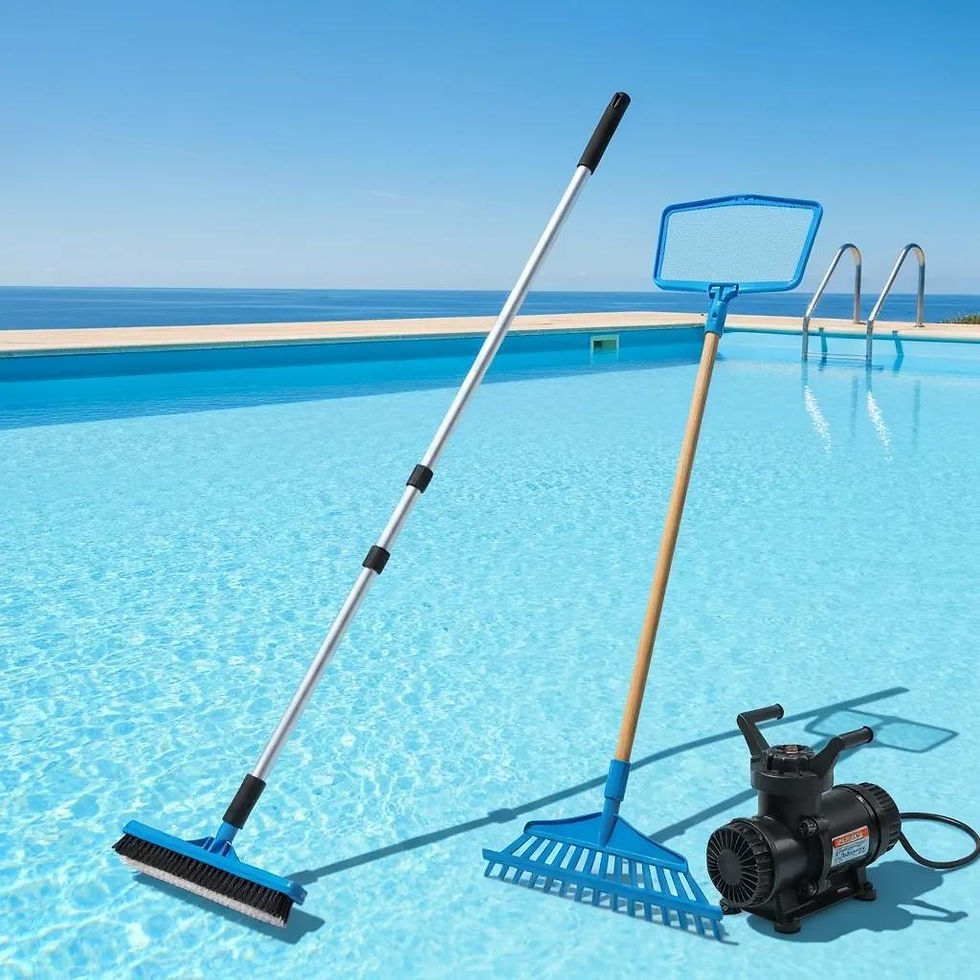
Manual tools are the backbone of weekly maintenance. They let you clear surface debris fast, tackle stubborn algae, and spot early wear on finishes. A telescopic pole with the right heads gives reach and flexibility; a skimmer net and leaf rake remove floating and heavy debris before filters clog. Match brush bristles to your pool surface to avoid damage and remove the biofilm that feeds algae. Together—skimming, brushing, and vacuuming—these tools keep filters from overworking. Below is a compact checklist of the core manual tools every weekly routine should include and why each one matters.
Weekly manual tools checklist and their primary benefits:
Telescopic pool pole: Adds reach and accepts nets, brushes, and vacuum heads for one‑tool versatility.
Skimmer net: Picks up leaves, insects, and dust from the surface to protect pump intakes.
Pool brush (surface‑appropriate): Loosens algae and prevents scale based on your pool finish.
Leaf rake: Collects heavy or semi‑submerged debris that a skimmer can’t handle.
These tools create the foundation of a weekly routine. After debris removal and brushing, move to targeted vacuuming and water testing to keep chemicals balanced and clarity consistent.
How Does a Telescopic Pool Pole Improve Your Cleaning Efficiency?
A telescopic pole extends so you can use one handle for nets, brushes, and vac heads—no climbing or heavy stretching. Extendable sections reduce bending and make tile lines, corners, and deep ends reachable and safer. Materials like anodized aluminum or fiberglass change weight, durability, and cost; lighter poles cut fatigue during weekly work. Use good technique—lock sections solidly, use long smooth strokes, and sequence tools—to work faster and avoid missed spots. A properly used pole speeds the job and helps keep water clearer over time.
That reach makes a skimmer net the first defense each week: remove surface debris early to prevent rapid filter strain and chemical waste.
Why Is a Skimmer Net Essential for Removing Debris Weekly?
A skimmer net on a pole removes floating debris before it sinks or reaches the pump, preserving circulation and easing filter load. Mesh size matters: fine mesh catches dust and small leaves common in desert areas, while coarser mesh speeds up large‑leaf removal. Use long, smooth strokes at a shallow angle to scoop without stirring dust back into the water. Rinse and dry the net after use and empty nearby skimmer baskets regularly to reduce nutrients that feed algae.
Good skimming clears the surface so brushes can attack settled biofilm along tile lines and steps without obstruction.
What Are the Best Pool Brushes for Different Pool Surfaces?
Brushes differ by bristle material and width to match pool finishes: nylon or polypropylene for vinyl, mixed or stainless bristles for gunite and concrete, and stainless edges for stubborn tile scale. Pick a width that fits your pool—wide brushes cover large pools faster, narrow heads reach spas and tight spots. Use steady, gentle pressure to avoid scratching delicate surfaces; firmer bristles work well on gunite to remove embedded algae. After brushing, vacuum or run circulation to capture loosened material so the filter can remove it.
With the right brush selected, heavy debris is handled next with a leaf rake—useful after storms or seasonal leaf drop.
How Can a Leaf Rake Help Maintain Your Pool’s Cleanliness?
A leaf rake is built for bulky or semi‑submerged debris that a skimmer misses. Its basket capture protects fragile items and reduces trips to the trash. Choose a sturdy frame and replaceable fine‑mesh bag if you empty it often after windy days. Use the rake before vacuuming so the pump and filter face a lighter solids load, and always rinse and dry the bag to prevent mold and odors. Store the rake off the ground and out of direct sun to extend its life and lower replacement costs.
Tackling heavy debris thoroughly makes automated cleaners and filtration more effective, which helps reduce weekly labor.
Which Automated Pool Cleaners Are Best for Effortless Weekly Pool Care?

Automated cleaners take the daily time burden off your plate by running scheduled cycles that vacuum, scrub, and filter with minimal hands‑on work. Which type fits depends on pool size, surface, and the debris you see most. Robotic cleaners offer strong particle filtration, energy savings, and smart navigation that manage fine desert dust well. Suction‑side and pressure‑side units tie into the circulation system and excel at continuous debris pickup or high‑volume leaf collection. Maintenance and costs vary: robots need cartridge emptying and filter rinsing, suction units depend on pump runtime, and pressure models may need booster pumps or bag swaps. Below is a quick comparison to help match a cleaner to your weekly routine.
Common automated cleaner categories and quick guidance:
Robotic cleaners: Best for energy efficiency and fine‑particle filtration on large or tiled pools.
Suction‑side cleaners: Budget‑friendly, simple operation when pump suction is good.
Pressure‑side cleaners: Great for heavy leaf loads and large debris with bagged collection.
Choosing the right cleaner reduces weekly labor and lengthens filter life. If you want a tailored recommendation, a professional evaluation will consider your pool’s circulation, debris patterns, and local water behavior before suggesting a model or installation.
Veteran Pool Service inspects cleaner compatibility during weekly visits—testing water behavior, circulation performance, and debris patterns—to recommend the most reliable option for your pool. Our technicians combine on‑site observation with diagnostics so you know which cleaner type will deliver the best weekly results. Schedule an assessment and a technician will review compatibility and demonstrate expected benefits so you can decide with confidence.
Intro to the EAV table below: This table compares the three automated cleaner categories on attributes that matter for weekly pool care, helping you choose the best type.
Cleaner Type | Typical Strength | Ideal Pool Types | Maintenance Needs | Average Price Range |
Robotic | High particle capture, energy‑efficient | Large, tiled, or irregularly shaped pools | Empty cartridge/filter and occasional brush replacement | Mid–High |
Suction-side | Affordable and simple | Smaller pools with reliable pump suction | Inspect hoses, monitor pump runtime, possible clogs | Low–Mid |
Pressure-side | Excellent for bulk debris | Pools with heavy leaf fall or large debris | Empty collection bag and check booster pump | Mid |
What Are the Benefits of Robotic Pool Cleaners for Las Vegas Pools?
Robotic cleaners suit Las Vegas pools because they filter fine desert dust well, run independently of the pump, and use less energy than long pump runtimes. Their onboard cartridges trap particles before they reach the main filter, reducing backwashing and lowering chemical use caused by clogged filters. Many models map the pool to reach corners and steps, meaning fewer missed spots and less manual brushing. Upkeep is simple—empty the cartridge, rinse brushes, check seals—so a robot pairs neatly with a weekly plan focused on clarity and equipment longevity.
Robots shorten manual time each week and contrast with suction‑ and pressure‑side options in cost and compatibility.
How Do Suction‑Side and Pressure‑Side Pool Cleaners Compare?
Suction‑side cleaners use the pool pump’s suction to move and are generally less expensive and simpler—but they rely on pump health and runtime, making them best for smaller pools with steady pump schedules. Pressure‑side cleaners attach to the return line or a booster pump and use water pressure to sweep debris into a bag, which is effective for large leaves but may require extra equipment and installation. Both types usually cost less upfront than robots but can add pump wear or need electrical components. Maintenance ranges from checking hoses and replacing diaphragms (suction) to emptying bags (pressure). Choose based on whether you need fine‑particle filtration or bulk‑debris handling.
Knowing these tradeoffs helps you decide whether an automated cleaner or professional weekly service will cut your weekly effort and extend equipment life.
How Do You Use Pool Water Testing Kits and Chemicals for Crystal Clear Water?

Reliable weekly testing plus targeted chemical adjustments is how you keep water balanced, prevent algae, and protect surfaces and equipment from scale or corrosion. Key weekly checks are pH, free chlorine, total alkalinity, and calcium hardness. Test in a consistent order to get trustworthy results that guide correct dosing. Kits range from strips to digital meters to titration sets; each trades off cost, accuracy, and learning curve. Use a dependable method and keep a log to spot trends. When adjusting, correct alkalinity first, then pH, and finally chlorine—this order helps chemicals behave predictably and makes shock treatments more effective.
Below is a simple weekly testing and balancing routine that keeps clarity steady and controls chemical spend.
Test pH, free chlorine, total alkalinity, and calcium hardness in that order.
Adjust alkalinity first if it’s out of range, then correct pH with acid or base.
Raise or lower free chlorine using chlorine products or shock to reach target levels.
Only use clarifiers or enzyme treatments after filtration and chemical balance are working correctly.
Keeping a testing log reveals trends and prevents recurring problems. If balancing becomes uncertain, professional weekly testing is a reliable alternative.
Intro to the EAV table below: The table compares common test kit types by accuracy, cost, and recommended use so you can pick a kit that fits your skill level and clarity goals.
Test Kit Type | Accuracy | Typical Cost | Frequency Recommended | Recommended User |
Test strips | Moderate | Low | Weekly for quick checks | Beginners or quick spot checks |
Digital meters | High | Mid | Weekly or biweekly; recalibrate as directed | Owners wanting precise, repeatable readings |
Titration kits (liquid) | Very high | Mid–High | Weekly when exact chlorine and alkalinity readings are needed | Technicians and precise balancers |
What Pool Test Kits Are Recommended for Accurate Weekly Water Testing?
Choose a kit by balancing accuracy, cost, and convenience: strips are cheap and fast for routine checks, digital meters give consistent numeric values with recalibration, and titration (liquid) kits deliver the highest accuracy for chlorine and alkalinity. For most owners, a calibrated digital meter plus periodic titration checks gives both convenience and precision. Follow the test sequence—alkalinity, then pH, then chlorine—so corrections take effect predictably. Clean and store reagents and meters per manufacturer instructions and keep a written log to spot drift or recurring imbalances.
Accurate testing steers correct weekly dosing, which leads to the next topic: which chemicals are essential and how to handle them safely.
Which Chemicals Are Essential for Weekly Pool Water Balancing?
Essential weekly chemicals include sanitizers (chlorine or alternative oxidizers), pH adjusters (muriatic acid or sodium carbonate), total alkalinity increasers or decreasers, and clarifiers or algaecides when needed for persistent turbidity or algae pressure. Target pH around 7.2–7.6, adjust free chlorine for sunlight and bather load, and keep alkalinity stable to prevent pH swings. Check calcium hardness periodically to protect plaster and tile. Always follow safety rules—wear gloves and eye protection, add chemicals to water (never the reverse), and store products in a cool, dry place away from incompatible materials. For complex swings or stubborn scale and algae, call a trained technician for diagnosis and safe treatment.
A predictable chemical routine based on accurate testing cuts down on shock treatments and preserves pool surfaces and equipment.
Why Is Professional Weekly Pool Service the Ultimate Tool for Crystal‑Clear Water?
Professional weekly pool service acts like a single, reliable toolset—combining manual cleaning, equipment checks, precise testing, and preventive maintenance—to protect water clarity and pool infrastructure while saving owners time and surprise repair bills. Technicians spot small issues during regular visits before they become expensive: pumps, filters, heaters, and circulation patterns are inspected and readings logged so you get a clear maintenance history. Consistent weekly service evens out chemical use, reduces emergency calls, and keeps filtration cycles tuned to local water chemistry—especially important in Las Vegas where mineral scale and desert dust require tailored care. For many owners, proactive weekly service is the most cost‑effective way to keep water swim‑ready and protect pool finishes.
Veteran Pool Service builds its weekly program on local experience and technician accountability to deliver those preventative benefits to Las Vegas pool owners. Our techs track documented pool data to spot trends and act on anomalies, which lowers long‑term repair costs and keeps pools ready to use. We communicate findings clearly; to arrange an assessment or ongoing weekly service tuned to local conditions, call us at (702) 374-8800 or email [email protected].
Intro to the EAV table below: This table outlines core service components and the measurable benefits weekly professional service provides compared with ad‑hoc maintenance.
Service Component | What Technician Does | Owner Benefit |
Weekly cleaning and skimming | Removes debris, brushes tile lines, and empties baskets | Less filter strain and clearer water |
Detailed water testing | Calibrated measurements with logged trends | Accurate dosing and chemical savings |
Equipment inspection | Checks pump, filter, valves, and heaters | Early fault detection and lower repair costs |
Documentation & communication | Service notes and clear recommendations | Transparent maintenance history |
How Does Veteran Pool Service’s Weekly Pool Service Save You Time and Money?
Veteran Pool Service saves time by removing routine labor—our technicians handle skimming, brushing, vacuuming, and calibrated testing during scheduled visits so homeowners don’t spend weekends on maintenance. We save money by catching issues early—failing pump seals, clogged filters, or rising calcium hardness—before they cause equipment failure or surface damage. Logged service data helps optimize chemical use, cutting back on over‑chlorination and unnecessary shock treatments that waste product and shorten equipment life. In Las Vegas, where mineral scale and fine dust quicken wear, regular professional attention preserves finishes and reduces the need for major repairs, producing measurable long‑term savings.
The technician approach also brings specialist tools and diagnostics, which leads into the equipment pros use on each weekly visit.
What Specialized Equipment Do VPS Technicians Use During Weekly Visits?
VPS technicians use professional‑grade tools: calibrated digital testers and titration kits for precise chemistry, vacuum systems with adjustable heads for efficient debris removal, and diagnostic gear to measure pump flow, pressure, and electrical readings. These instruments reveal subtle declines in performance that signal upcoming failures, allowing timely fixes that prevent emergencies. Specialist brushes, high‑capacity skimmer baskets, and advanced filtration rinse techniques pair with chemical adjustments to restore clarity quickly. This mix of diagnostics and pro tools delivers faster, longer‑lasting results than homeowner equipment—especially important in Las Vegas where local water demands precise tuning.
Seeing how pros work helps owners choose the right supplies if they want to handle parts of their routine themselves. Next, we cover how to pick cleaning supplies.
How Can You Choose the Best Pool Cleaning Supplies for Your Weekly Routine?
Pick supplies that match durability, compatibility, and ergonomics to your pool material, size, and local debris patterns so weekly work is effective without harming finishes. Favor corrosion‑resistant materials, heads that fit a standard telescopic pole, and products with clear warranty and replacement‑part availability. Think lifecycle cost: a higher‑quality pole or brush often saves money over frequent replacements. For Las Vegas, prioritize fine‑mesh nets for dust and brushes and chemicals that fight mineral scale from hard water.
Below is a decision‑focused list of product features and trade‑offs to guide purchases.
Durability over low initial cost: long‑lasting materials reduce replacement frequency and total cost.
Compatibility with your pool finish: matching bristles to surface prevents damage.
Repairability and parts availability: replaceable bags, bristle heads, and pole segments extend tool life.
To help buying decisions, the table below compares core manual tools against key attributes and suggested replacement intervals for a weekly routine.
Tool | Material | Durability | Pool Surface Compatibility | Recommended Replacement Interval |
Telescopic pole | Aluminum/fiberglass | High | All (match head types) | 3–7 years depending on use |
Skimmer net | Fine‑mesh nylon | Medium | All; pick mesh for dust | Replace bag annually or when torn |
Pool brush | Nylon or stainless bristles | High | Vinyl (nylon), Gunite/tile (stainless) | Replace every 1–3 years |
Leaf rake | Mesh with metal frame | Medium | All | Replace bag when frayed or torn |
What Features Should You Look for When Buying Pool Cleaning Tools?
When buying tools, prioritize corrosion‑resistant materials, ergonomic grips, standard attachment fittings, and solid warranty support to limit downtime and replacement cost. Look for poles that lock securely, fine but durable meshes for desert dust, and brushes with bristle types matched to your finish. Favor tools with replaceable parts—bags, bristle heads, and pole sections—so you can repair instead of replace. Finally, choose products with clear manufacturer care instructions to extend service life and keep weekly routines efficient.
Choosing the right features prepares you to adjust selections for Las Vegas water conditions, which we explain next.
How Do Local Las Vegas Water Conditions Affect Your Choice of Cleaning Tools?
Las Vegas pools face hard water, mineral scale, and fine desert dust—so pick tools and chemicals that help manage minerals and frequent skimming. Use stainless bristle brushes for scale‑prone tile and clarifiers to help filters trap fine particles. Fine‑mesh skimmer nets catch dust before it increases chlorination demand, while sturdy leaf rakes handle occasional heavy debris storms. Expect slightly shorter replacement timelines than in wetter climates because mineral deposits and abrasive dust wear bristles and mesh faster.
Adapting tool choices to local conditions reduces weekly labor and keeps chemicals working efficiently; next we cover tool care that preserves performance long term.
What Are the Top Tips for Maintaining Your Pool Cleaning Tools for Long‑Term Use?
Good tool care extends life and keeps cleaning effective. After each use, rinse tools with fresh water to remove chlorine and minerals, then air‑dry in shade to avoid UV damage and warping. Inspect bristles, mesh, and pole locks monthly; tighten loose fittings and replace worn parts promptly to avoid inefficient cleaning. Seasonal care—lubricate moving parts, store poles disassembled, and treat metal parts lightly for corrosion—keeps your weekly routine working and reduces replacement costs.
These maintenance steps lead into specifics on cleaning and storage below.
How Should You Clean and Store Manual Pool Cleaning Equipment?
Rinse nets, brushes, and poles after each session, remove trapped debris, and let them dry completely in the shade to prevent mildew and UV breakdown. Lightly oil threaded metal connections and inspect for corrosion; clear hair and debris from bristle heads and replace heads with bent or missing bristles. Store poles horizontally or hung indoors to avoid warping and keep attachments organized for weekly use. For seasonal storage, use a dry ventilated area and keep tools separate from chemicals to prevent accidental contamination.
Proper cleaning and storage preserve performance and reduce how often you must replace tools. The next section explains when replacement is needed.
When Is It Time to Replace Your Pool Cleaning Tools?
Replace tools when physical damage affects performance—ripped net bags, bent or cracked pole sections, missing bristles, or corroded fittings that compromise function. Signs a tool is past its prime include repeatedly missed debris, algae that won’t come off with brushing, or repair costs that exceed replacement. Typical timelines: nets and bags about annually, brush heads every 1–3 years, and poles every 3–7 years depending on use. If upkeep costs more time and money than a new tool, prioritize replacement to keep weekly maintenance effective.
If you’d rather avoid the hassle, Veteran Pool Service can take over routine maintenance and equipment checks—we’ll recommend timely replacements and handle procurement and installation. Call (702) 374-8800 or email [email protected] to schedule a weekly service assessment tailored to Las Vegas pools and minimize downtime from worn tools.
Cleaning Automation: Systems for Swimming Pools and MoreExamples of automatic cleaning systems for floors, facades, swimming pools, ventilation ducts, and sewer lines illustrate the current capabilities of cleaning automation and hint at future developments.Cleaning automation, 2009
Frequently Asked Questions
What is the best time of day to clean my pool?
Early morning or late afternoon is best. Cooler temperatures and lower sun intensity help chemicals behave predictably and make the work more comfortable. Cleaning at those times also removes debris before it settles and causes bigger problems.
How often should I test my pool water?
Test at least once a week. If the pool sees heavy use or hot weather, test two to three times weekly. Regular testing of pH, chlorine, and alkalinity lets you catch imbalances before they lead to algae or cloudy water.
Can I use household chemicals for pool maintenance?
Don’t use household chemicals. Pool products are formulated for aquatic use and won’t upset your water balance or damage surfaces. Always use pool‑specific chemicals and follow the manufacturer’s directions.
What should I do if my pool water turns green?
Green water usually means algae. Test pH and chlorine first, then shock the pool according to the test results. Brush walls and floor to loosen algae and run the filter continuously until the water clears. If the green persists, call a technician for a targeted treatment.
How can I prevent debris from accumulating in my pool?
Use a pool cover when the pool’s not in use, skim the surface regularly, and keep a weekly cleaning schedule. An automated cleaner or a skimmer system also helps manage debris and reduces manual effort.
What are the signs that my pool cleaning tools need replacement?
Look for ripped nets, bent poles, missing bristles, or tools that no longer remove debris effectively. If a tool requires frequent repairs or slows your work, it’s usually more cost‑effective to replace it.
Is professional pool service worth the investment?
Yes—especially for busy homeowners or anyone unfamiliar with pool chemistry. Professionals handle cleaning, precise testing, and equipment checks to prevent costly repairs and keep your pool in top condition. Regular service saves time and gives peace of mind that the pool is maintained correctly.
Conclusion
The right combination of manual tools, automated cleaners, and reliable chemical testing keeps your pool crystal clear while cutting weekly maintenance time and cost. Match tools to your pool surface and local conditions, follow a consistent testing routine, and lean on professional service when needed to protect your investment. For tailored plans and expert help in Las Vegas, contact Veteran Pool Service to keep your pool swim‑ready all year.


Comments